Rain cleared before dawn. 12°C, building breeze.
Woke before 6 and fixed breakfast. Re-packing the bag took a while but I made time for sweeping out the bothy.
My sleep in the night was good but had a strange interruption. From deep sleep, my mind was penetrative by a sound. At first like an approaching steam train, all thundering and chuffing. The sound got closer to the bothy, the thundering deeper and deeper. And an unearthly grunting and chuffing. It was a herd of deer, maybe in stampede. I have been spooked by deer before, at Glenfinnan for example. Still wary of them.
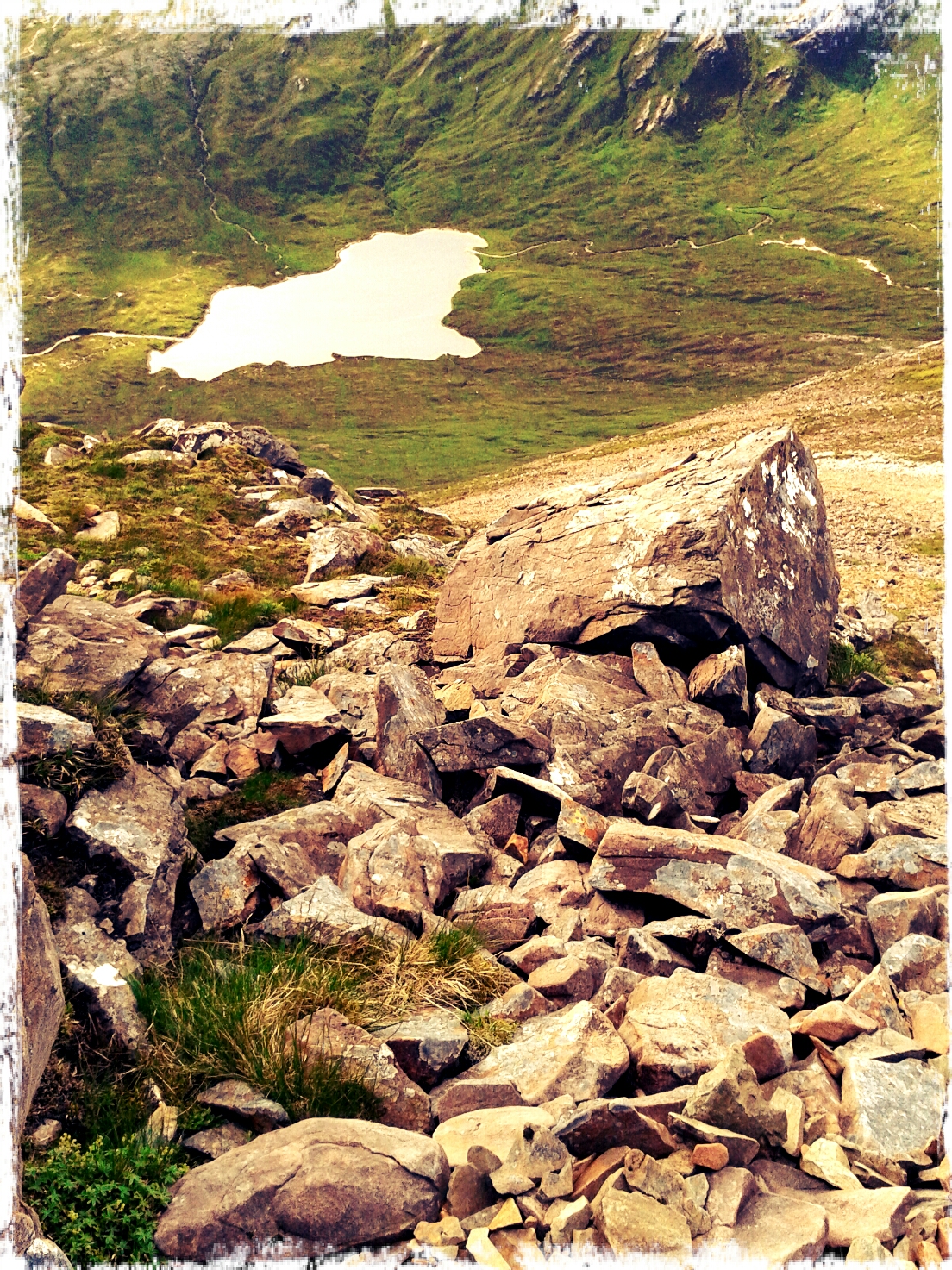
Anyway, back to my ‘adventure’. I left the bothy at 8am and got to the bealach by 10. The climb only took an hour and a half. It starts over brittle, sharp quartzite. More quartzite, loose and steep, then to more friendly sandstone. Quartzite seems less likely to be consolidated by organic matter, and much looser on steep slopes. The summit is found after several ledges of pillow like sandstone. It has the best cairn I have seen. It has six shelters arranged like an asterisk.
The summit was a bit cold to spend long there. The strong wind saw to that.I met and chatted to few people on the way down, but I was definitely the first up.
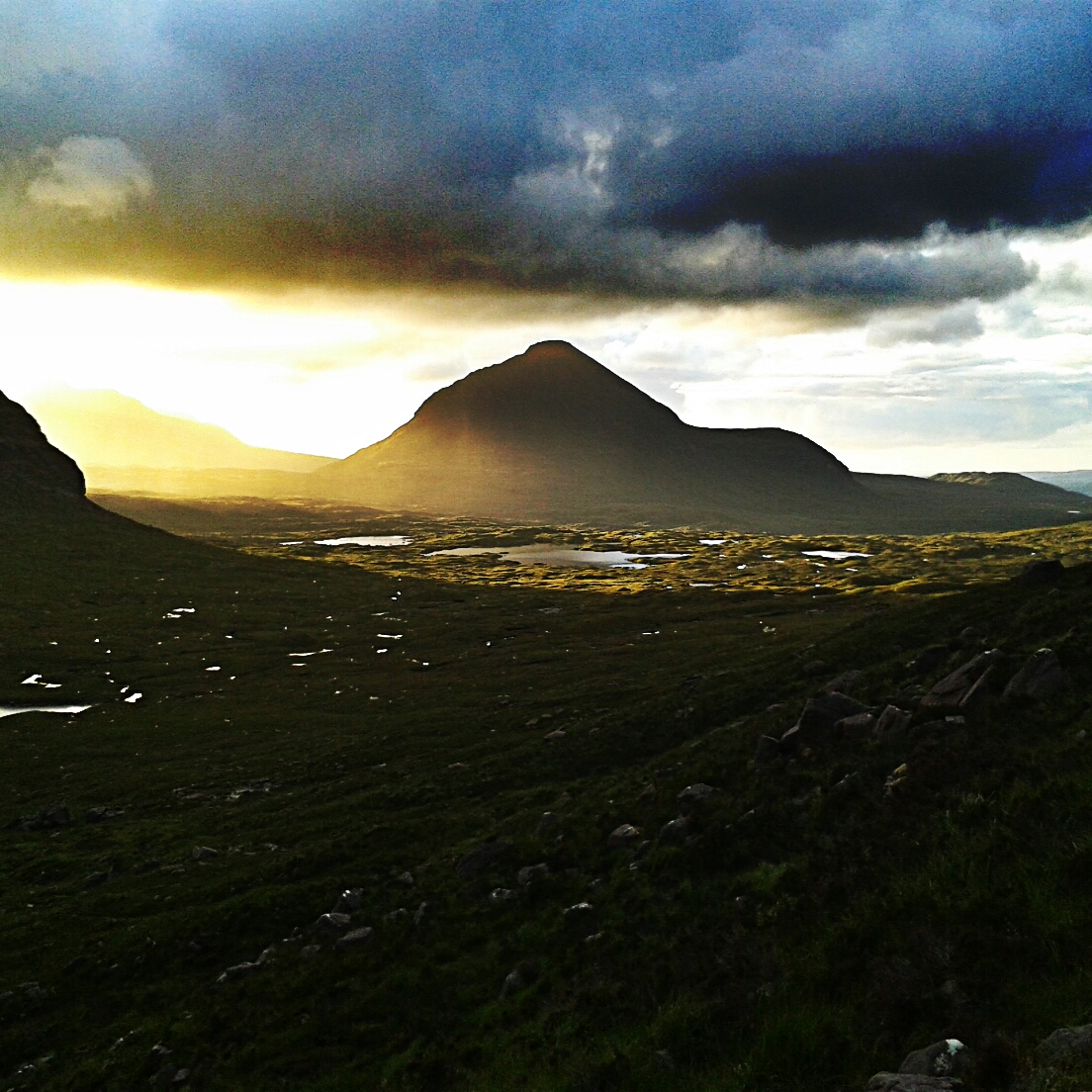
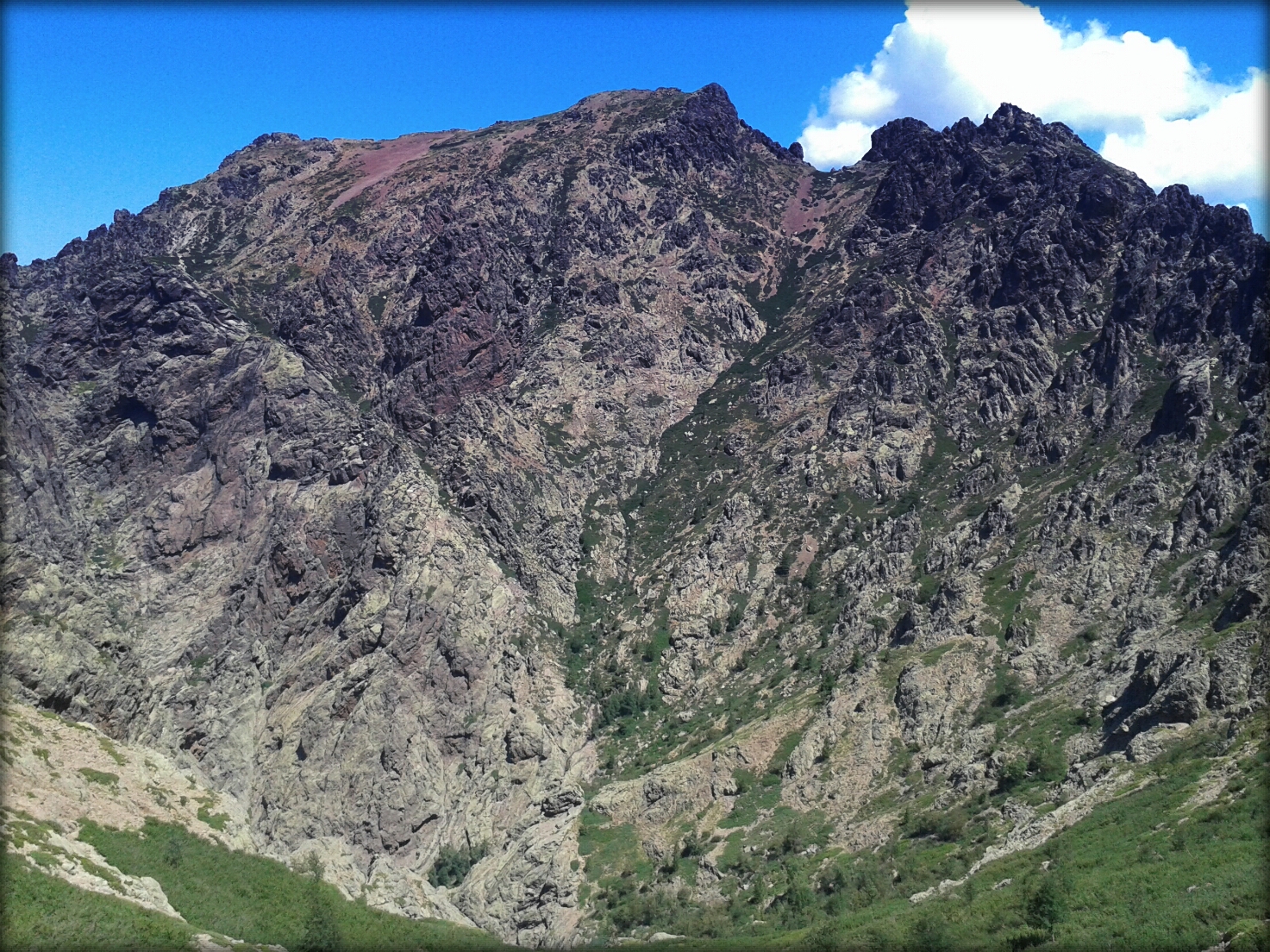
Something caught my eye on the way back to collect my stash. The Mountain opposite. It lifted from the same bealach as MCd. But the curves, textures and shapes in the quartzite captivated me. The way the inclined layers blended into the bealach reminded me of those fascinating forms you can find in comes. I will have to spend a day with this mountain.
On the walk out, I took my time. The loch beneath the day’s summit has beaches. I couldn’t resist washing my feet in it’s pure, clear waters. Lovely.
The day drew to a close with improving skies and stronger wind.
Author Archives: essiep
Part 1: Sgurr Rhuadh, 966m.
Bright sun and stiff breeze to start. Ended with rain set-in and building wind. 12C,
I lie alone in a bothy with roaring wind outside. Here’s what I have done:
Sgurr Rhuadh, a fairly remote munro that requires a long walk-in. Thus, I hatched a plan, make the summit from Torridon, and stop in a bothy. Then wake up and climb Maol Cheam Dearg, from there, return to Torridon.
I committed to the approach from the north because I stashed my heavier kit under an overhanging sandstone boulder. So my route had to be an out and back. So far so good.
Despite there being no indication on the map, or the guidebook, there actually is a decent path up the ridge to the summit. I found it on the way down.

Today’s walk was characterised by sharp, brittle clinking quartzite boulders. They are more slippery than they look. It’s not the quartzite at fault, it’s lichen. Oh, and frogs everywhere. Big ones, tiny ones but all with similar colouring. The colour scheme is the same idea, at some are more black than others. All keen to jump out of my way, all elbows and knees.
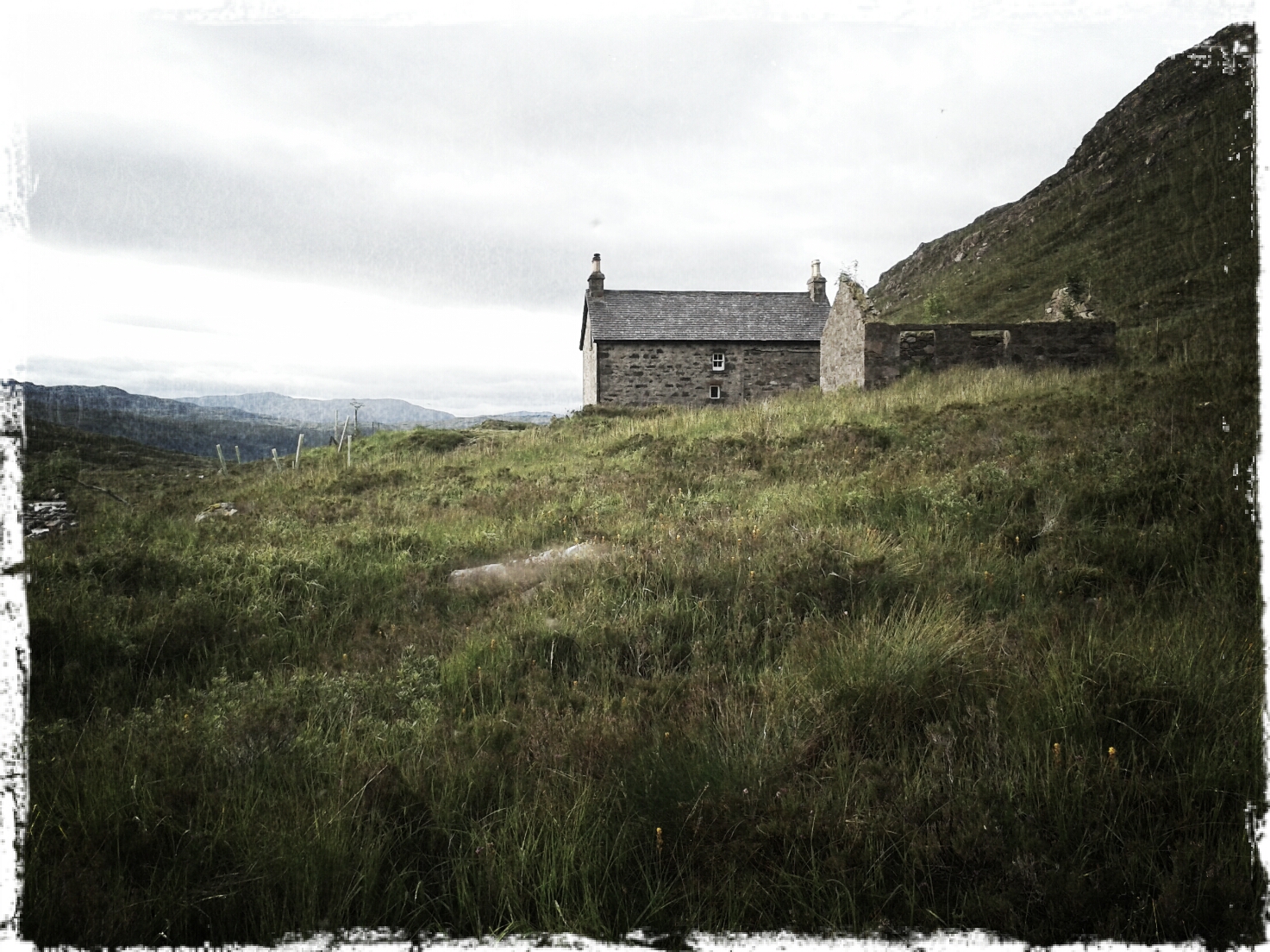
Eventually, I made it to the bothy. On the way stood an isolated sentinel stone, bright white with lichen. In that light, the owns in the structure could have been crafted by a 1960’s sculptor. It is far older than that. The bothy is an old crofters house, now owned by the estate and used as a mountain hut by the Mountain Bothy Association.

Nevertheless, it looks like a good place to make up ghost stories. A few trees have been planted nearby, and as I plodded to towards, I was convinced that they were people by the house.
The place was empty. In good condition outside, even the windows were tidy. Inside was all wood clad, in dark brown. These places are very sparse, Capel any furniture, not even bunks. You have to choose room and sleep on the floor. I picked upstairs facing the river.
Now to settle in and find how well I have packed.
Torridon rest day.
16°C, fine summer’s day.
Some breeze has kept the midges under control. However, though I feel the enthusiasm, as soon as any walking turns uphill, then my legs complain. Therefore, cafes, drives to interesting places and general slowness is on order.
Thinking, talking on the summits yesterday turned to those without a head for heights. I announce that I have a theory: it runs in parallel to motion sickness. That’s when our inner-ear balance organs disagree with what you see. The comparison is valid in my little theory, one I dreamt up while traveling along a ridge.
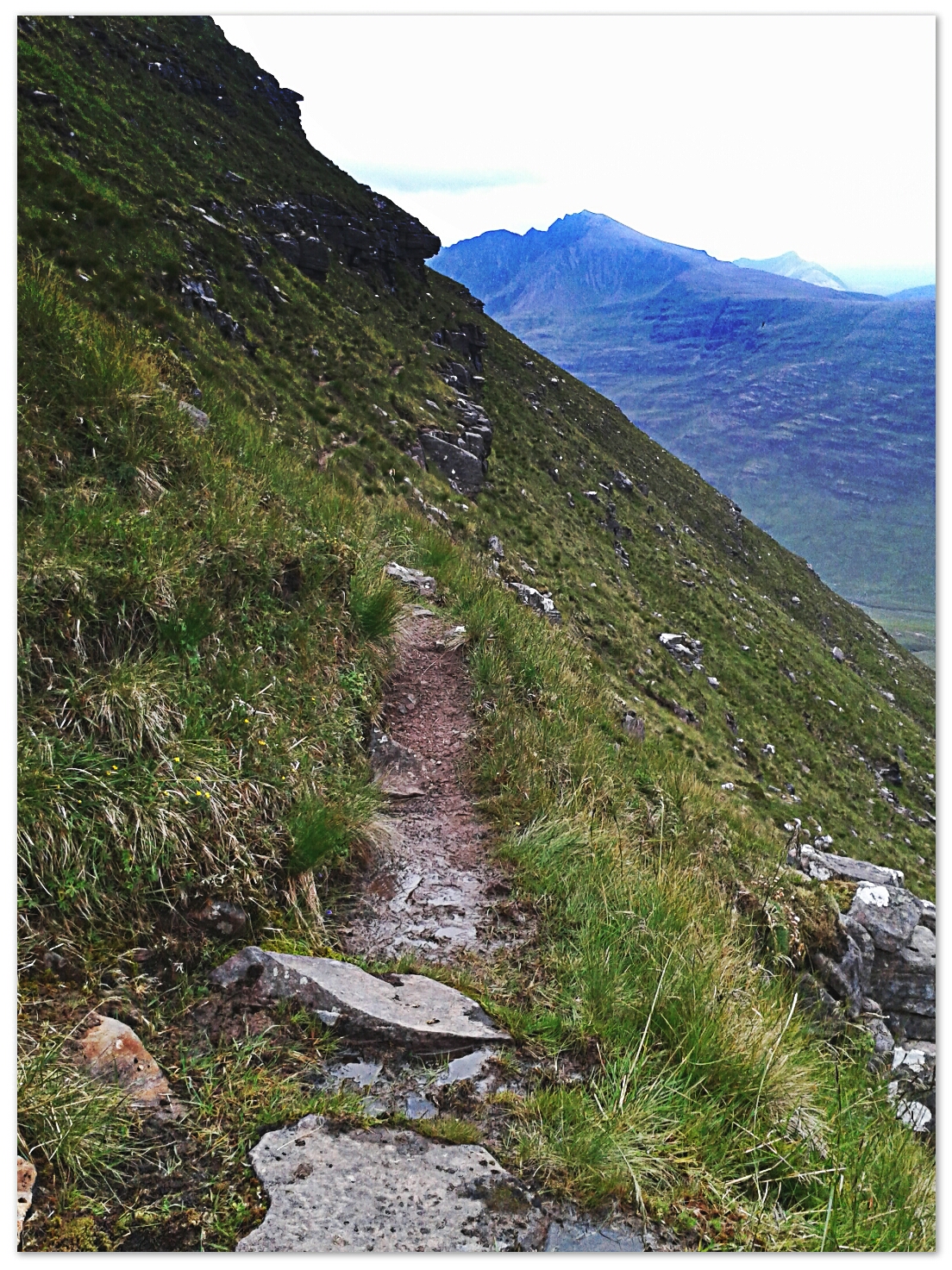
Normally, you walk along and the ground appears to move beneath your feet. Also normally, the apparent movement in your peripheral vision matches that under don’t. Walking on a ridge breaks that rule. The ground under your feet, moves at about 4mph. That in the periphery, does not, it’s 2,000 metres away so looks still. A disconnect that your mind may not handle.
That’s my theory. Does it sound okay?
Atmospherics: it’s a shame, in a way, to rest on a day like this; the weather is ideal for a few summits. The sun is now down, but it has triggered some interesting effects. There are clouds forming abut 300 up, they don’t extend much higher. So the peaks here all show their summits.
The plan; to hike tomorrow and do an overnight stop in a bothy. I want to make one munro summit tomorrow and another on Thursday before returning here. They are both quite remote and no phone signal apart from on the tops. I left a route card with the mountain rescue here at the SYHA in Torridon.
I still prefer to travel solo. What rubbish do people talk about when they’re in a party? Wouldn’t it get irritating? How about not saying anything?
Beinn Alligin.
13°C, milky overcast and zero wind.
2 munros, Sgurr Mor, 986m, and Tom na Gruagaich, 922.m. The Horns (Na Rathaoan) is a Corbet.
Start 9.00 and back at camp at 19.15 including walk in and out time.
The horns of Beinn Alligin: started off at 9am, and walked to the start-point. It was a mistake, because the hour that took, was time off the summits.
Anyway.
The ‘Horns’ are pinnacles which are fun scrambling places. I went up the first one and part of the last one.

After these, the two Munros loom ahead. The are not that hard, it’s just something about their ‘mood’ that is intimidating. The whole mountain group is old red sandstone, a good snag for walking. The grip is always good and there are springs not far below. That was the only problem I had, the last summit was a much because of thirst. Oh, and the midges.
The still air was perfect for midges, even at 1000m altitude. I had to eat my food pacing about to stop them building up.
Maol Chean-Dearg orbital.
Improving weather, 14°C, light SW and sky breaking up during.
Small summit, Bealach an Rhuadh-Stac, 603m. 7.5 hours walk, probably 12miles.
It was only supposed to be a rest day jaunt, maybe 4 hours or so. It turned into seven. In short, I did an anticlockwise circuit around Maol Chean-Dearg.
This really is the heart of the Torridonian hinterland. More old red sandstone layer cakes and iced with quartzite caps. The high point, Bealach an Rhuadh-Stac was all crunchy white quartzite, hard and sharp.
The tracks were bereft of human footprints, but mountain-bike tracks were continuous. Incidentally, there were horse’s hoof marks and a dog’s paw prints too.
There is a bothy further south, which I may use if my plan works. I’d like to do a multi-day trek to take in a few munros and wild camp too. This looks like the place to do it!

The forecast looks great for tomorrow, but duller on Tuesday. So to make the best use of tomorrow, I hope to go up Ben Alligin to the west of here. That will be a full day with at least two munros and views of the Atlantic.
Today confirmed that my fitness is plenty, as long as I have enough food.
Ben Eighe, 3 munros.
13°C, 8 at the tops, cloud about 800m, lifting later to showers. Some sunny intervals.
Majestic B. Eighe is perhaps less intimidating than other Torridonian peaks, especially Laithach.
I started the climb at 10am and made the first summit at about 12.30. From there it’s possible to go in several directions. My route was West along a white quartz ridge.that drops you down to a bealach then onto a grassy flatter summit area that would be great for a wild camp. In fact, it is reminiscent of Craig Meagaidh over by Glen Spean.
There were plenty of alpine status in flower, just like the ones in my garden.
After the second, easy summit Munro, I considered scaling Sail Mhor, but after looking at the drop down to the bealach, I turned around. That descent was almost like one of the famous buttresses. There probably is a good route, but I feared running out of time.
Back then to the cairn and down to the bealach connecting Rhuadh stac Mor. The third and last munro was easy too. From here, you could see past me Skye in tho distance. In every direction, there were fantastic things to feast your eyes upon. East was vast expanses of space and quartzite scree. North, Slioch was just visible between rain showers.
Rain returned regularly today. That left sunny bits between and the light was magical.

Finally, the bit I always dread, the descent. Initially, a deep gully that looked much worse than it was. The technique was to use the sandstone blocks at the side like a staircase. Easy really. At the bottom of this stage, I could finally restock water. The most delicious spring water oozed out of the sandstone to the left.
Feeling replenished, I had the energy to tackle the descent quickly. Failing light was quite worrying by now. The views were not. Long shadows and crepuscular beams reached out from a sunset behind Ben Alligin. I can’t wait to see the photos properly
I finally reached the car at 21.50, nearly 12 hours after starting out.
To Torridon.
13C, low cloud but not much rain.
More driving: but yesterday was all driving too. To break it up, I hoped for a walk. AND I found one. It was near Loch Cluanie. There is a fine ridge that puts you between three Monroes. The name, Am Bathach. At the northern end is a bealach which looks like a good place to bivvy. There are banded rocks, probably gneiss, which appear to offer the right amount of shelter.
The ridge itself offered that effect where you can see the distant ground in you peripheral vision moving strangely behind the ground beneath your feet. You’d have to see it to know what I mean.
With all these choices, three summits and two escapes down, a decision had to be made.
Right at the last minute, I took the one recommended in my guide book.
Scotland has had unusual amounts of summer rain this year and much of it remains in the boggy ground. The return was very squelchy.
With a late start, I didn’t get down until 18.30 and faced a long drive to Torridon. So I ate at the Cluanie Inn. There I listened to an American girl talking to some drunk old gents about Ben Nevis. She must be planning to climb it tomorrow.
Oban, at the end of the road.
23°C, Clear blue and light wind.
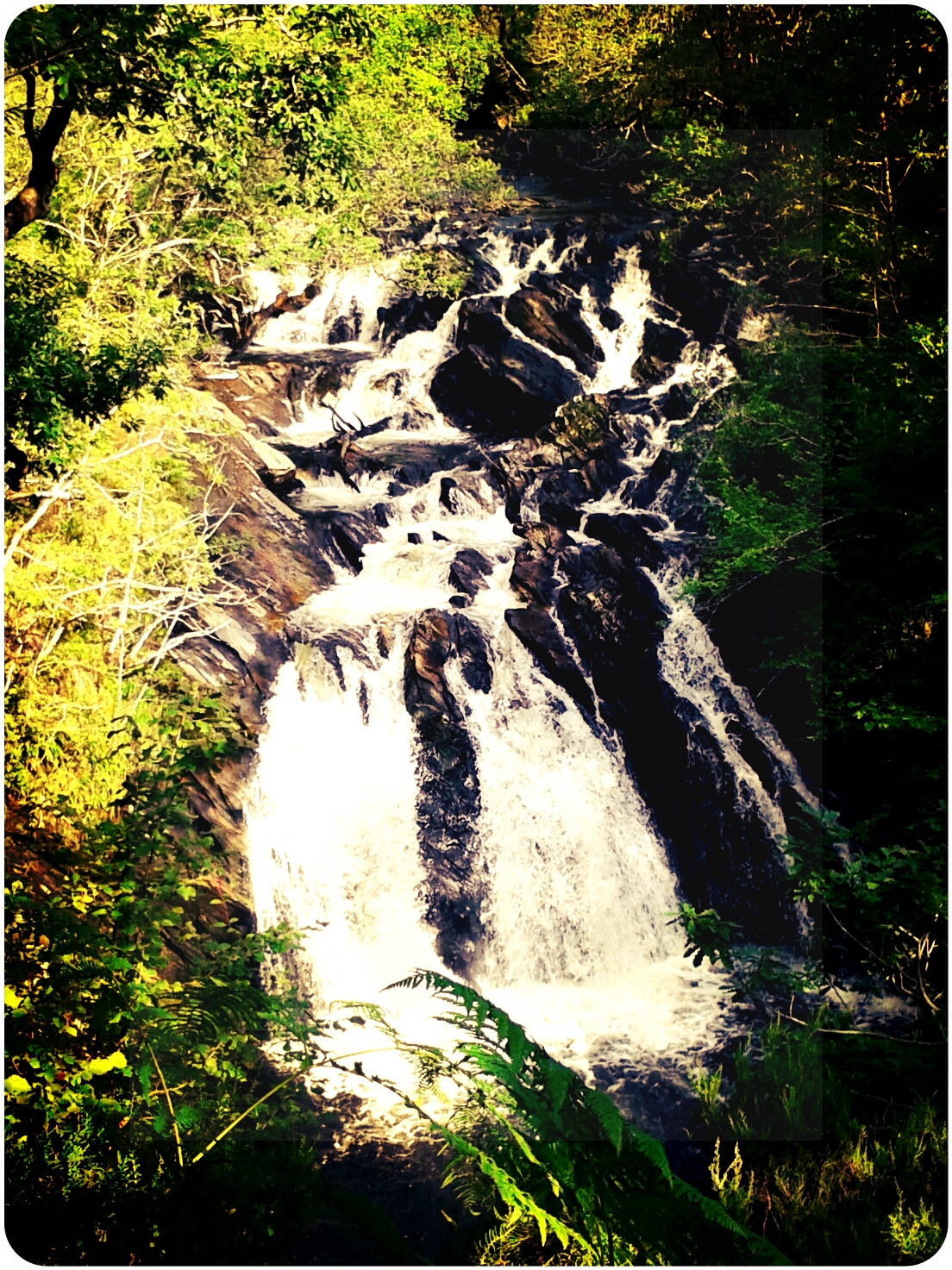
Chased north avoiding the rain. Started at 09.15 and got to Oban at 18.00. No rush, it’s good to stopp a few times: one layby in Glen Awe, there is a marked walk in the woods to a very nice waterfall. Just what I needed when sat in the car driving for all those hours.
The forecast has changed, it looks like the heavy rain has tracked east and gone to the other side of Scotland.
GR20, Stage 2.
34°C in the valley, 24 on tops.
Epic mountain day. Walked Stage 2 against the flow. Most people start in Calenzana and head south. Mine was a day walk so I didn’t have to consider following stages.
The guide book says this is the stage that most people who are going to drop out of the Randonne will do so. It’s the heat and the long distance between water supplies that finishes them off, it says.
I took nearly four litres in the pack, and not much else.
Parked at Refuge de Bonifatu 535m. The walk up to the refuge at Caruzzo is relatively easy, especially when in the cool shade of forest. The first sign of nearing the refuge is a bizarre scaffold structure perched on a rock: a helipad.
From Col to Col.: First stop after the refuge was the Bocca Innomidata (1865m). Here the view of the most daunting section was laid out in front. A large steep sided bowl with a ring of pinnacles north and west. Each on their own looked fearsome, but to face a ring like teeth round this devilish jaw. If you stare, a few fawn threads that mark the path can be seen. Between them lay black charred canines.

Drinking water: I had enough but other people did not. With 3 litres, I could get to the spring in 3 km.Half way round the circuit, I met a couple of older french guys who were struggling a bit. One had an injury and the other had split his bottle and lost his water. He was the second person with the same problem today. The moral is; never use a disposable mineral water bottle.
Help! I need a geologist: intrusive landforms. What strange shapes these rocks made. The rocks are various types of granite. That’s an intrusive silicate magma.
My big question: are there surfaces like casts from a mold made by over lying rocks that have since eroded away?
I am used to looking for glacial relics, but here there is nothing to support such an idea.
Looking at the unfolding land, you can imagine thick magma being pushed into lower layers. In some places, there are bubbles big hooting to push your fist in. In other places, you could get a VW Beetle into the bubble.
There was little of the frost shattering that I’m used to seeing in upland UK. Strange, enchanting and always – sublime.
Finally start the descent. The pale green marking on the map and contours makes this look easy enough. Firstly, some big blocks to clamber over. The blocks didn’t really relent down the valley.
If you look closely enough at the map, a tiny droplet shape marks the spring. On the ground it was tiny too, just a black plastic pipe in a stone. A steady flow of water provides delicious refreshment. I took on another 2 litres for my rack.
This part of the walk took far longer than I expected, probably over 2 hours. That was frustrating, despite the unexpectedly smooth granite valley walls.
Aspen and boar;
After a short rise, a new valley. This one had aspen trees and was thinner. Between the clearings, the refuge started to appear. This snapped and a rush. Wild boar scattered away from my footsteps. There’s one to tick off- scare wild boar.
Descent into the dark forest: stopped briefly at Refuge Ortu di a Pobbu for coffee and mall loaf. Then the long walk down to the car. Light failed about half way and progress became frustratingly slow with owly a head torch to pick out tripping hazards.
Back at the car by 22.30.
Scandola
30°C, light wind and fierce sun. Some humidity.
Boat tour to Scandola. It’s a Unesco World Heritage Site. In other words- a nature reserve. Though the sea state was nothing remarkable, quite a few tourists were sea-sick, including some from my party. Some boats seem to do that.
The geology caught my attention most, is red granite with porphyry texture. It has eroded into roundish doughy forms. You can imagine how the viscous intrusion pushed and glooped deep beneath. The texture is just as interesting: porphyry cools twice, giving big crystals in a finer matrix. Here it’s pink, almost the colour of hematite.